Audio exhibition · 9 stops
The Kriegers' Kraków
The city on glass negatives, 1866–1912
Where: On site or from home, in the app
Stops in this exhibition
The whole exhibition is in the Vernissio app, free.
-
1
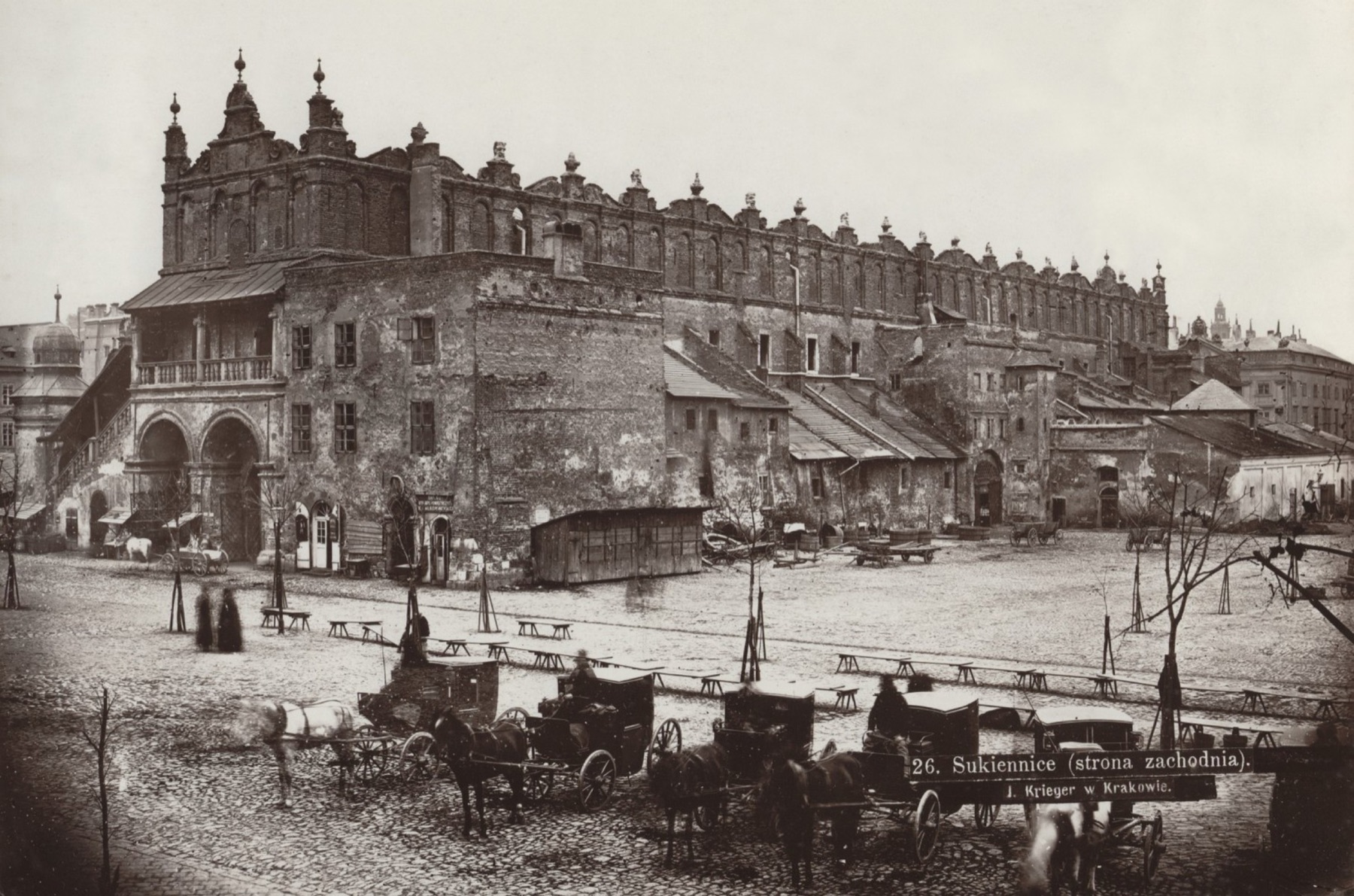
The Cloth Hall from the west
In this photograph from 1870 the Cloth Hall (Sukiennice) is still surrounded by stalls and annexes. They disappeared during the rebuilding of 1875–1879, carried out to a design by Tomasz Pryliński. Cabs wait in the foreground.
-
2
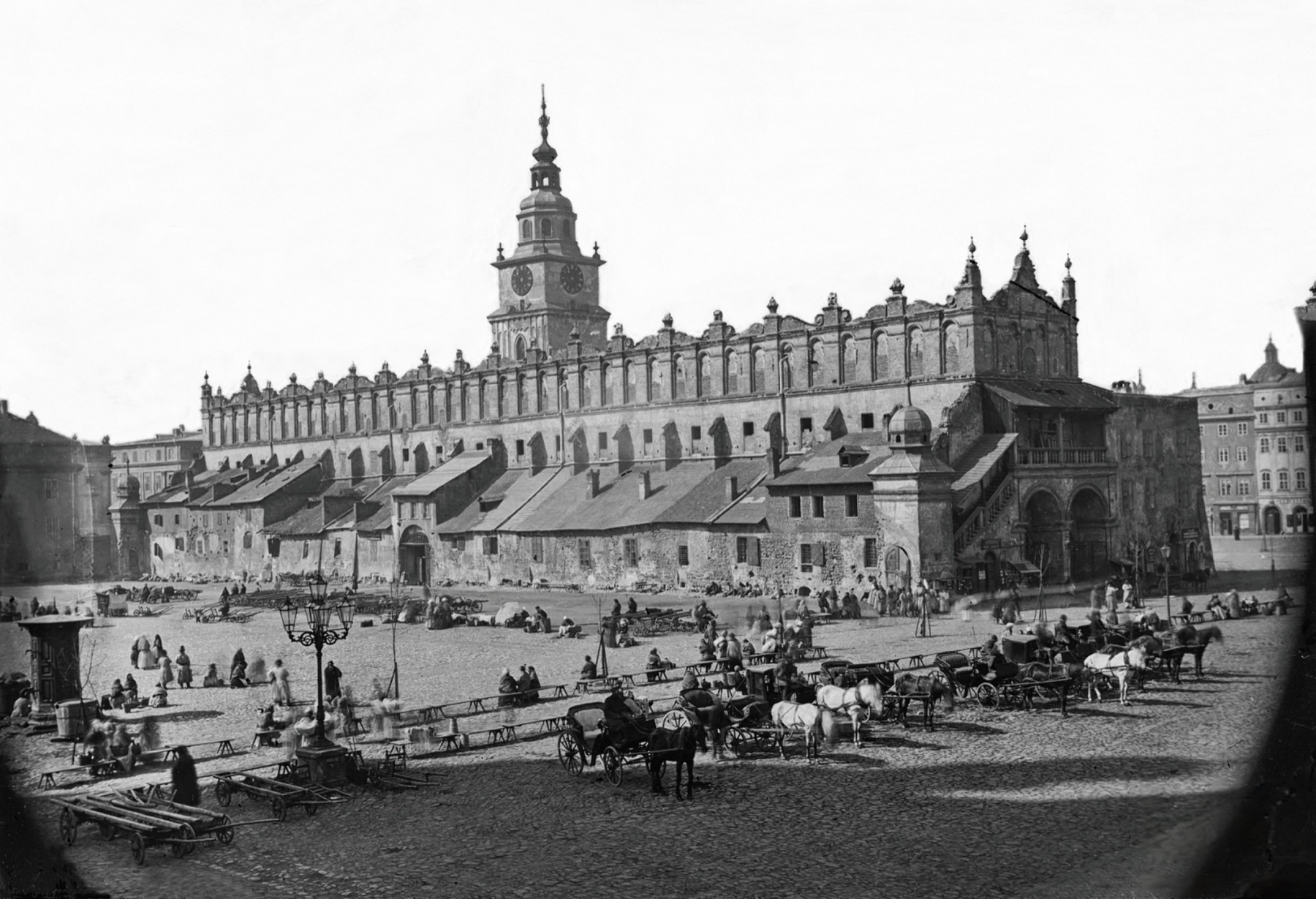
The Main Market Square before the rebuilding
The Main Market Square and the Cloth Hall (Sukiennice) in Ignacy Krieger's photograph from 1872. Carts, cabs and stalls stand on the square. The rebuilding of the Cloth Hall began three years later, in 1875.
In the app -
3
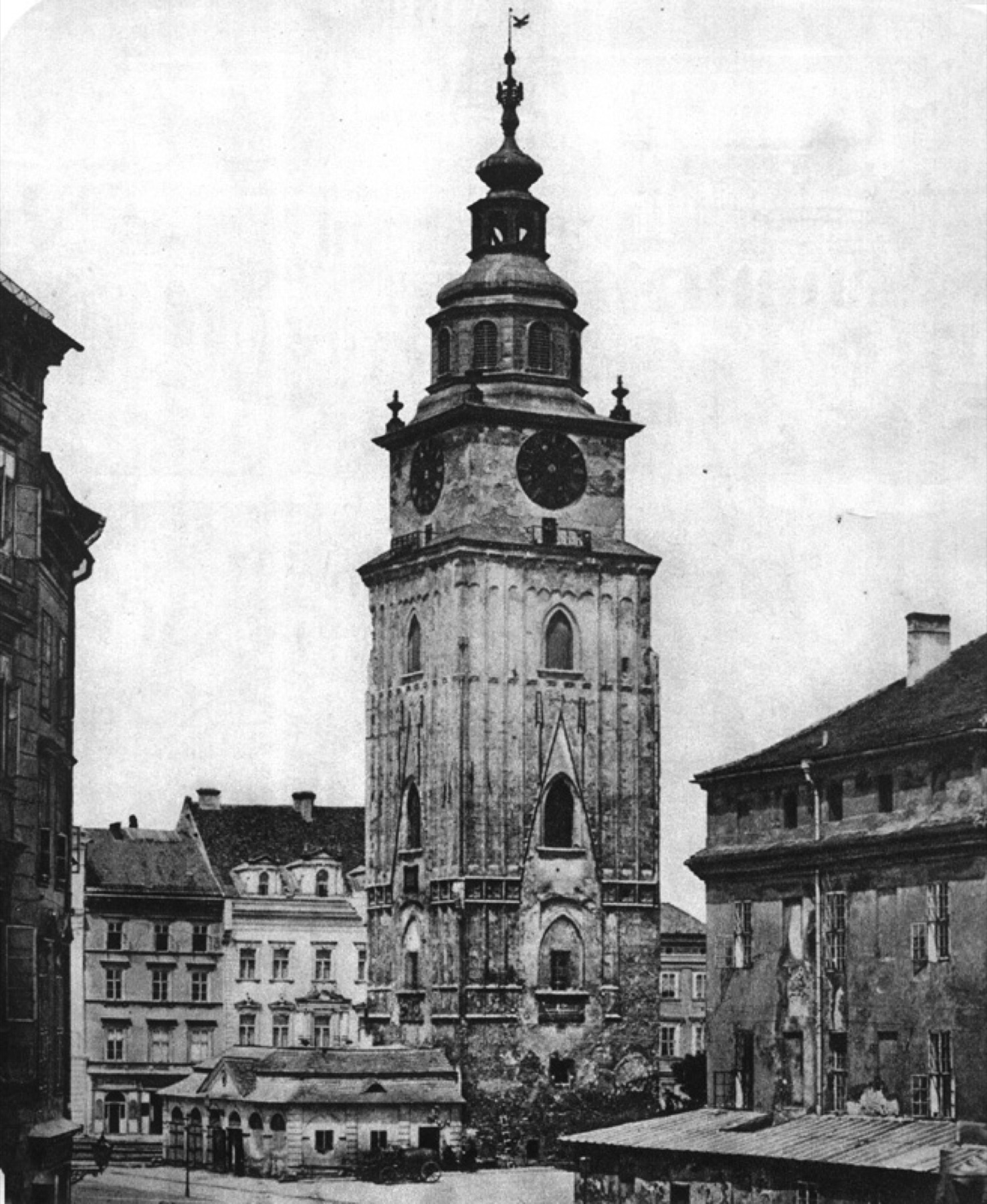
The Town Hall Tower
The tower is all that is left of Kraków's town hall, demolished in 1820. At its foot stands the guardhouse. On the right you can see part of the Great Weigh House, a building demolished around 1870.
In the app -
4
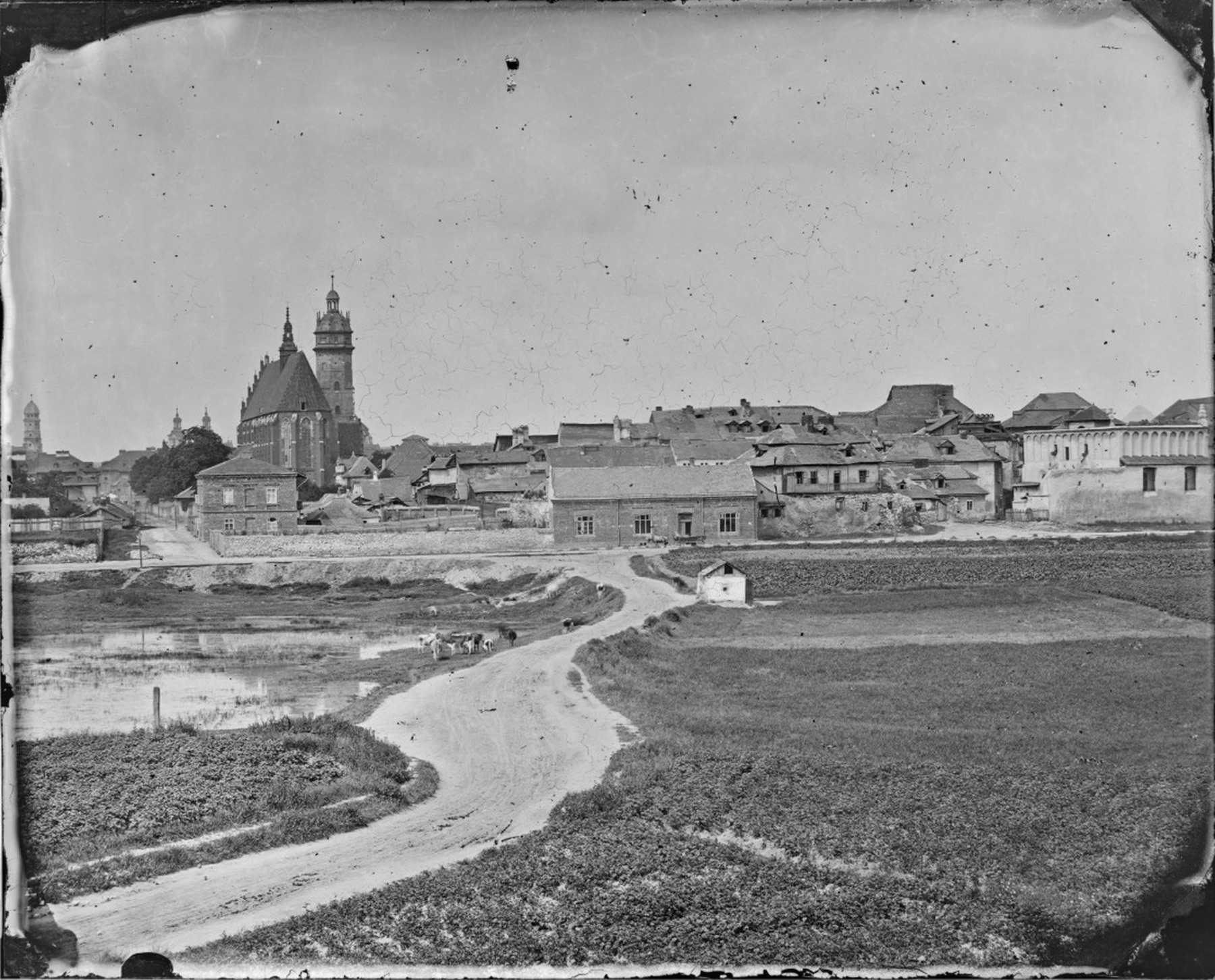
Kazimierz from the east
Kazimierz, granted its town charter by Casimir the Great in 1335, was a separate town until 1800. In this photograph from 1870 Corpus Christi Church rises above the rooftops. According to the description in the Museum of Kraków collection, the Old Synagogue is also in the frame.
In the app -
5
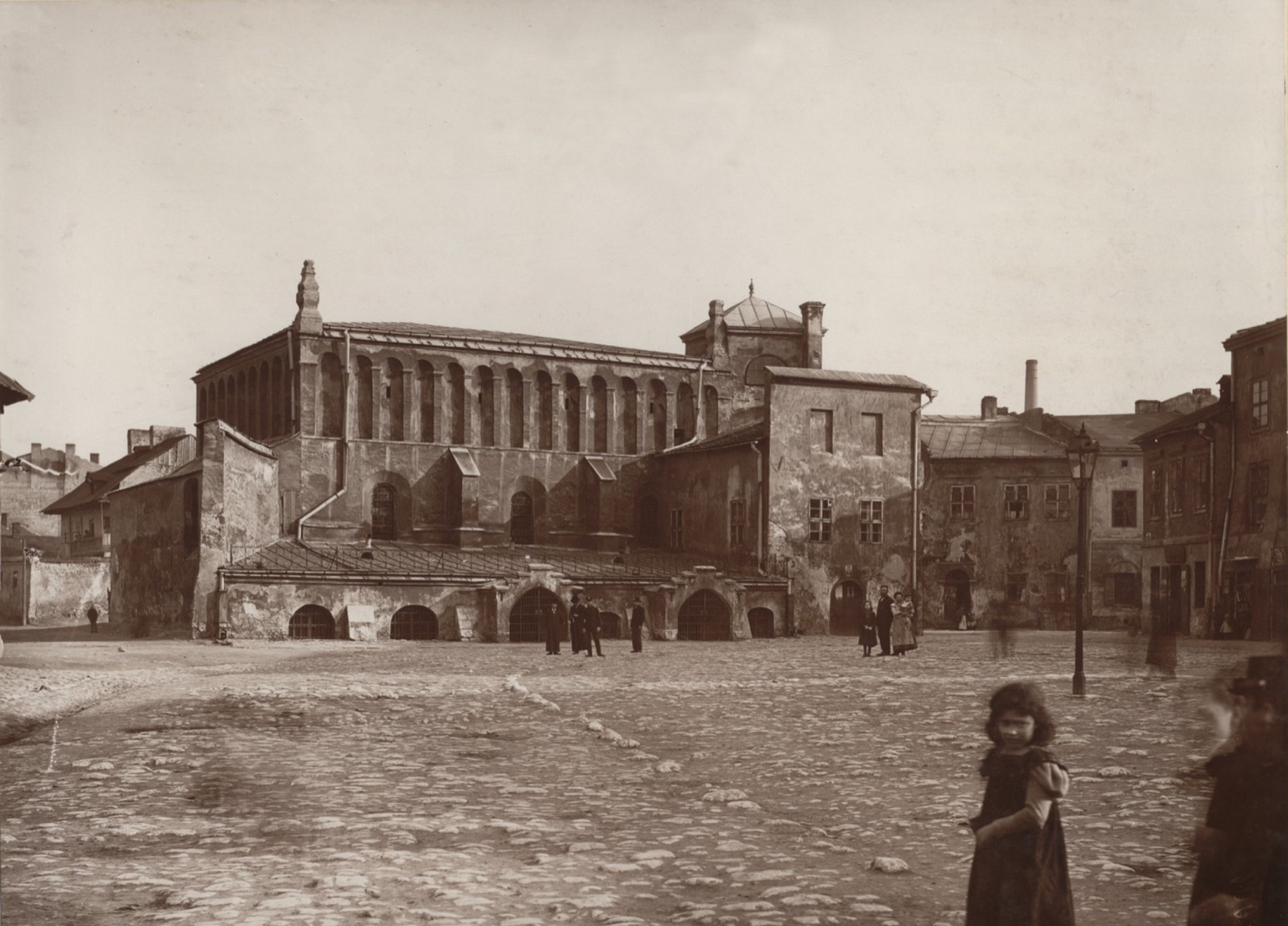
The Old Synagogue
The Old Synagogue in Kazimierz is one of the oldest surviving synagogues in Poland. It was built at the turn of the 15th and 16th centuries, and after a fire in 1557 it was rebuilt by Mateo Gucci. Today it houses the Judaica collection of the Museum of Kraków.
In the app -
6
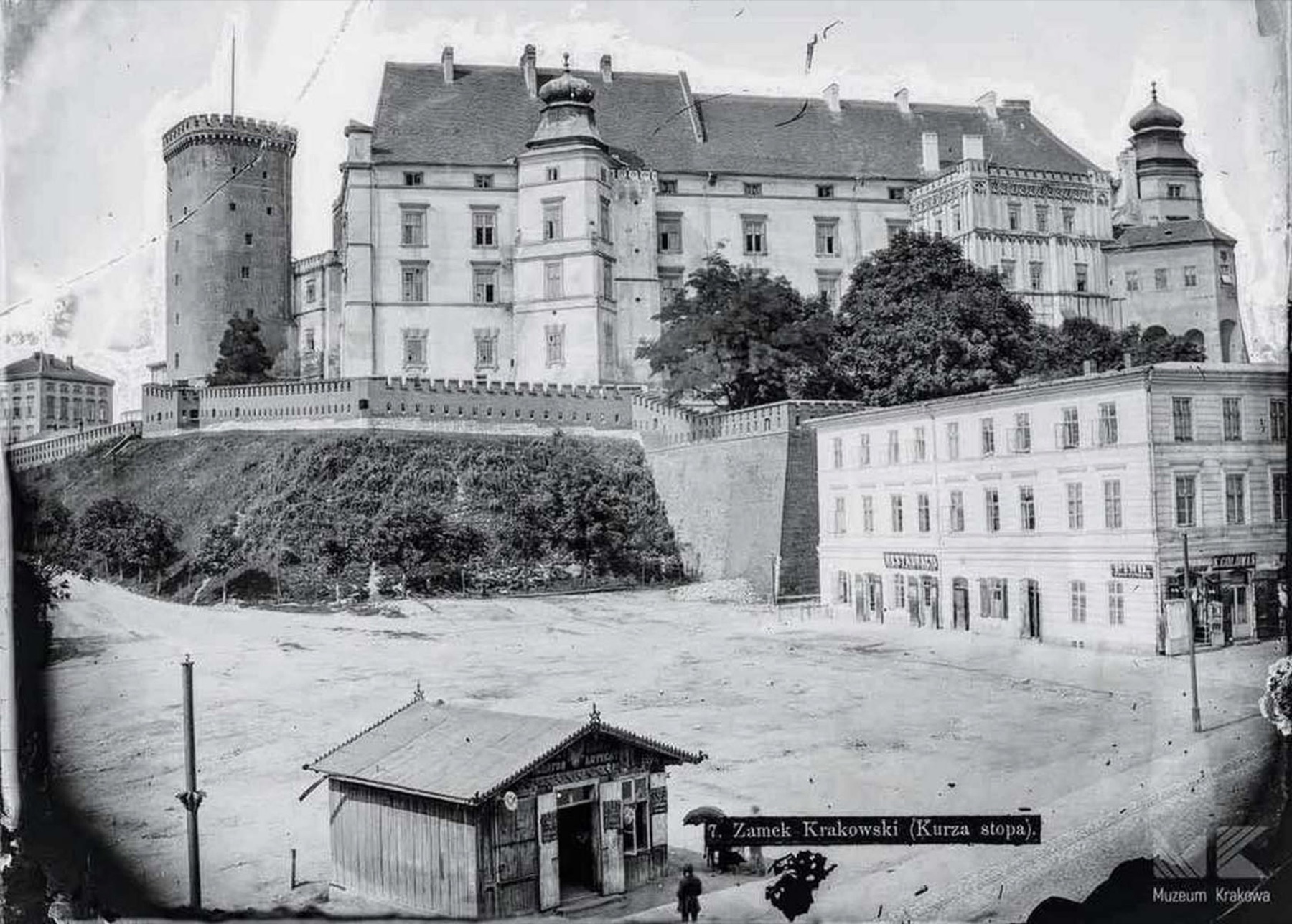
Wawel as a barracks
From 1846 Wawel Castle was once again occupied by the Austrian army, which kept a barracks there. In 1868 Wincenty Pol proposed in the daily “Czas” that the castle be restored to its former splendour and turned into a museum. The army left the castle in 1905.
In the app -
7
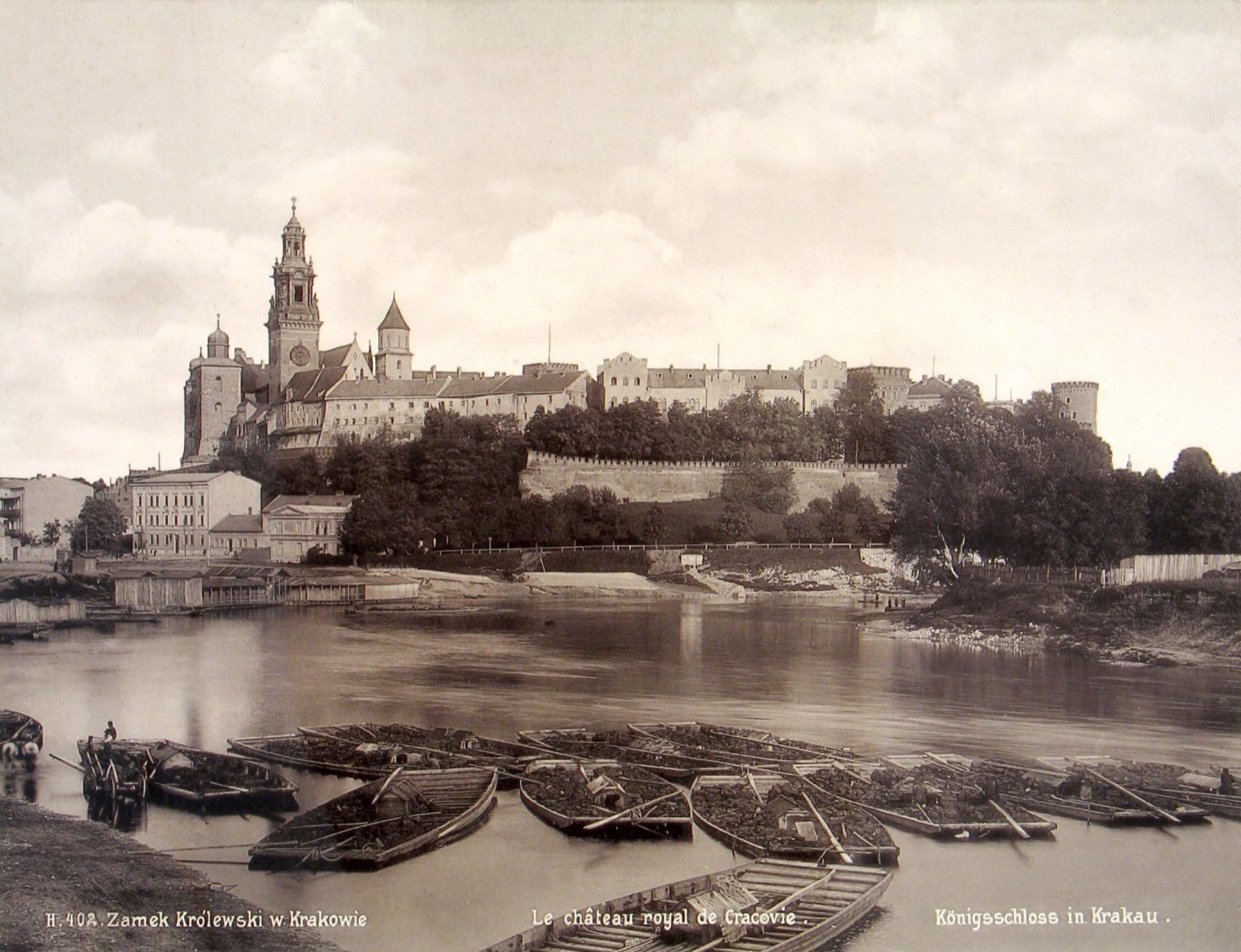
The Vistula below Wawel
A photograph from 1900 by Natan Krieger, Ignacy's son. Natan ran the studio together with his father and carried on his work after his father's death in 1889. The Austrian barracks still stand on the hill.
In the app -
8
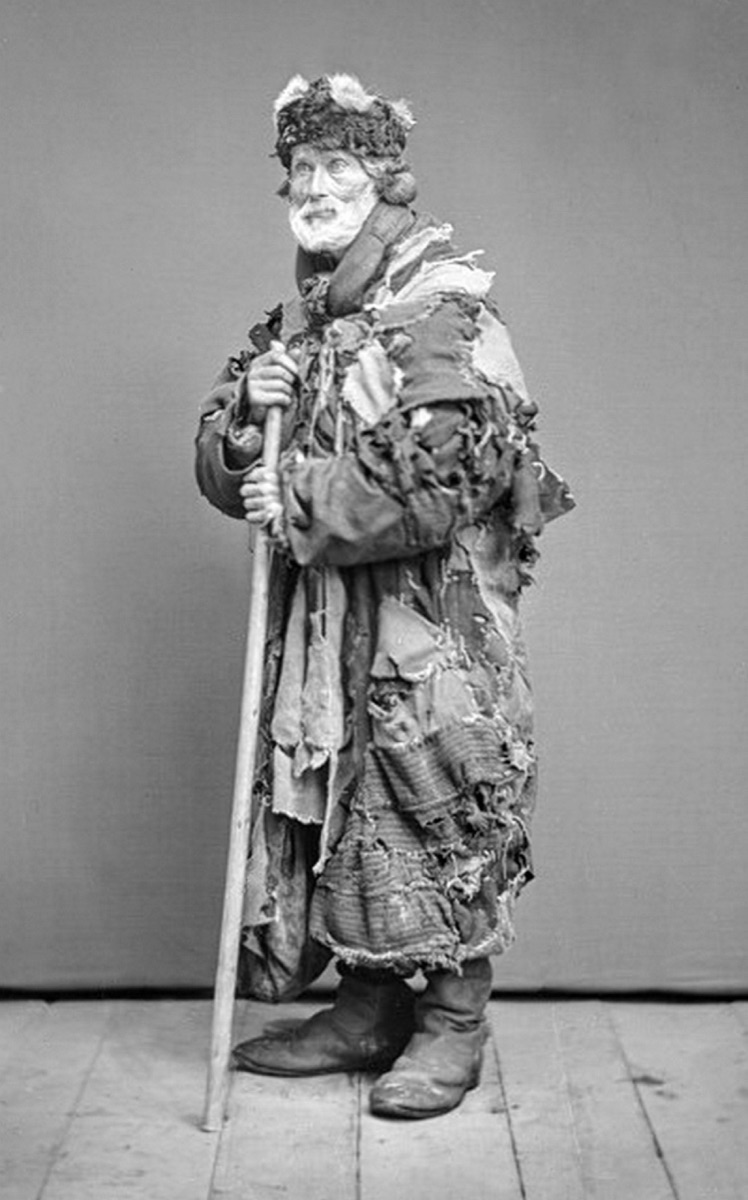
A Kraków beggar
The Krieger studio made more than views of the city. A separate part of its work is its photographs of “folk types”: peasants, highlanders, Hutsuls. This portrait of a beggar, known in Kraków as a dziad, was taken in 1866.
In the app -
9
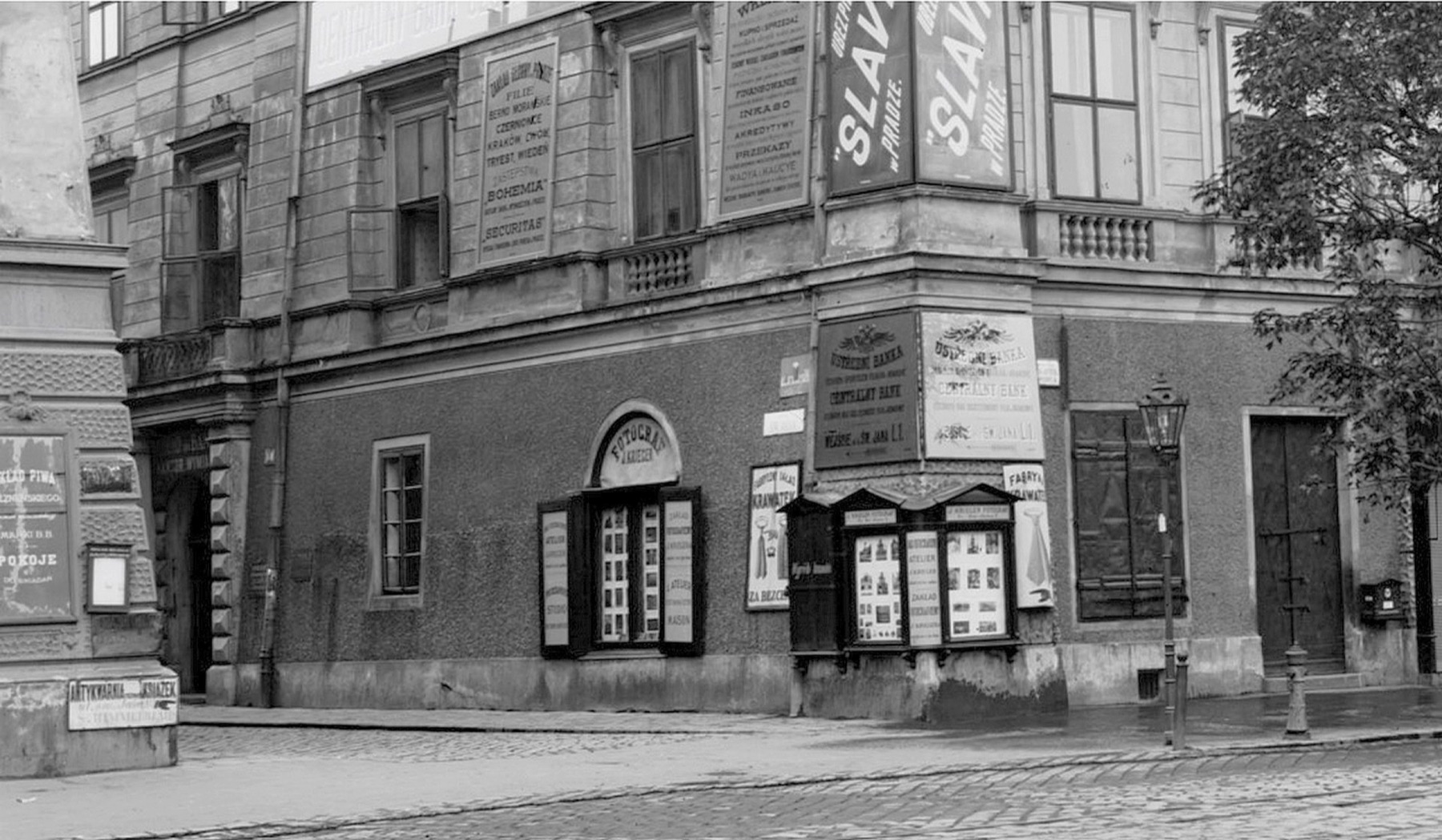
The Kriegers' studio
The Kriegers' photographic firm and studio on św. Jana Street, in a photograph by Amalia Krieger from 1912. After her brother Natan died in 1903, Amalia ran the studio. In 1926 she handed the glass plates and the whole workshop over to the city. Since 1967 the collection of about 9,000 glass negatives has been kept by the Museum of Kraków (formerly the Historical Museum of the City of Kraków).
In the app